Innovative Research in Action

Discover our ongoing research lines, focused on advancing knowledge and innovation across multiple feilds. Exploring how we are pushing bounderies and driving progress.

Biomaterials for Bone Regeneration and Immune Modulation

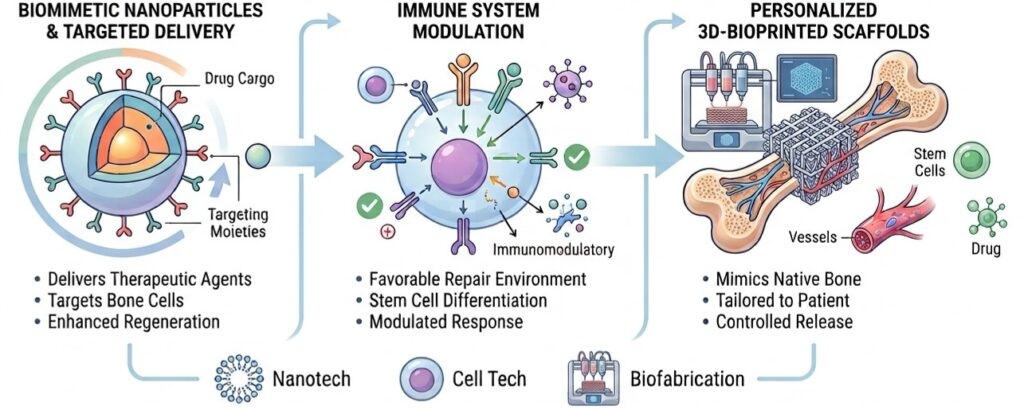
This research line centers on the development of advanced biomaterials to support bone regeneration in degenerative conditions such as osteoporosis and fragility fractures. The core strategy involves designing biomimetic nanoparticles capable of delivering therapeutic agents directly to bone cells, enhancing regeneration while reducing tissue degradation.

A key innovation lies in the integration of immune system modulation, where specific pathways are targeted to create a favorable environment for tissue repair and stem cell differentiation. These insights are applied to the creation of personalized 3D-printed scaffolds, which mimic the structure and composition of native bone and enable controlled release of bioactive compounds.

By combining nanotechnology, immunomodulation, and biofabrication, this research aims to establish next-generation biomaterials that offer precise, effective, and personalized solutions for bone tissue engineering.
Related funded projects

Biomaterials and Drug Delivery Systems for Osteoarthritis Treatment

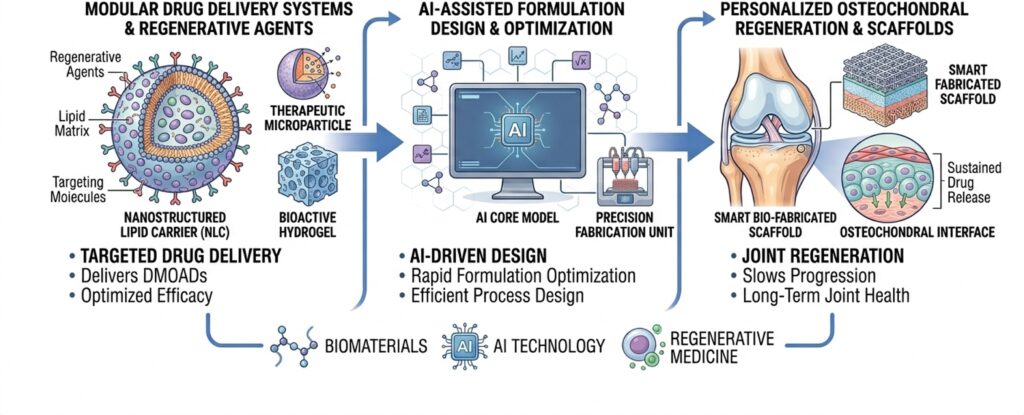
This research line is dedicated to the design and optimization of advanced biomaterials for the treatment of osteoarthritis (OA), a degenerative joint disease affecting millions worldwide. The focus is on developing intra-articular drug delivery systems (DDS) and scaffolds that not only relieve symptoms but also target the underlying mechanisms of joint degeneration.

By combining biomaterials, regenerative medicine, and artificial intelligence, we aim to create precision-engineered DDS capable of sustained drug release and enhanced therapeutic efficacy. These systems include nanostructured lipid carriers, microparticles, scaffolds and hydrogels, designed to deliver anti-inflammatory and regenerative agents directly to affected joints.

A key innovation in this research is the use of AI-assisted formulation design, which enables efficient optimization of DDS properties and fabrication processes. This approach supports the development of disease-modifying OA therapies (DMOADs) that can slow or halt disease progression, offering long-term benefits for patients.

Through the integration of smart biomaterials and computational tools, this research line aims to advance OA treatment beyond symptom management, paving the way for personalized and effective osteochondral regeneration strategies.

Related funded projects

Advances drug delivery systems and biomaterials for wound regeneration

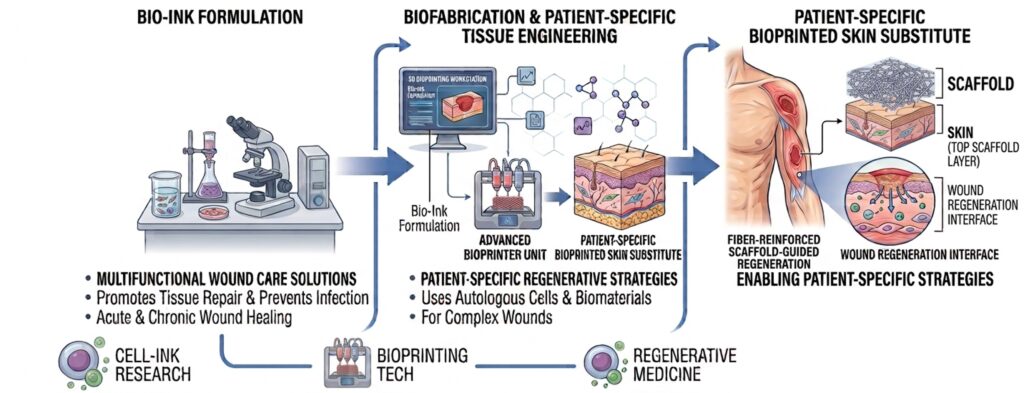
This research line focuses on the development of advanced drug delivery systems and bioactive biomaterials for wound regeneration. By integrating biomaterials science, 3D printing, and regenerative medicine, the research aims to create innovative therapeutic platforms that promote tissue repair, prevent infection, and enhance healing in acute and chronic wounds.

A key area of research is the development of patient-specific bioprinted skin substitutes using autologous cells and biomaterials to advance new regenerative strategies for complex wounds. In parallel, the group designs 3D-printed wound dressings and scaffolds based on natural and synthetic polymers, incorporating bioactive compounds such as berberine, thymol, and zinc ions to provide controlled drug delivery and antibacterial activity.

The integration of drug delivery, tissue engineering, and biofabrication technologies enables the creation of multifunctional wound care solutions that support functional tissue regeneration and contribute to the next generation of advanced therapies for skin repair.

Related funded projects

Funding